Wednesday, April 16, 2025

chatGPT 4o Leaves Ethan Mollick in the Dust

Yet balancing the surprising strengths of LLMs are similarly odd weaknesses. ones that can often be difficult to identify. Tasks that were easy for an AI can be hard for a human. and vice versa. As an example. to take a question developed by Nicholas Carlini, which of these two puzzles do you think OPT-4, one of the most advanced AIS. can solve? In Carlini’s words:

(a) What is the best next move for O in the following game of tic-tac-toe?


or

(b) Write a full JavaScript webpage to play tic-tac-toe against the computer; it needs to be completely working code. Here are the rules:

  • The computer goes first.
  • The person clicks on squares to make their move.
  • The computer should play perfectly and so never lose.
  • If someone wins. then say who won.

The Al easily writes the working webpage in one go but tells us. “0 should place its next move in the middle square of the top row"—a clearly wrong answer. Where AI works best. and where it fails, can be hard to know in advance.

And the truth is?


Tic-Tac-Toe Strategy: What Should O Play?

Given the current state of the board:

   A   B   C
1  _ | _ | O
  ---+---+---
2  _ | O | X
  ---+---+---
3  X | _ | X

We want to determine the best move for O.

Step 1: Check for a winning move

O has two positions already:
- C1 and B2

No line (row, column, or diagonal) is one move away from a win for O.

Step 2: Check if X is threatening to win

X occupies:
- C2, A3, and C3

Look at row 3: X has A3 and C3. The center of that row—B3—is currently empty.
If O does not play at B3, X will win on the next turn.

✅ Optimal Move for O: B3

Placing O at B3 blocks X from completing the bottom row.

Updated Board:

   A   B   C
1  _ | _ | O
  ---+---+---
2  _ | O | X
  ---+---+---
3  X | O | X

This move neutralizes the immediate threat and keeps the game alive.

Tuesday, April 15, 2025

Blacklisted TED Talks - Ones You Shouldn't Waste Your Time On


There might be something in them, but the ethical thing to do is to reduce them to a single slide so that people can spend 30 seconds on them rather than 10 minutes!

Culprit: Engineering the Human Nervous System: Megan Moynahan at TEDxBrussels

Takeaways:

  1. We can restore movement after paralysis using existing technology.
  2. Muscles still work — we just need to reconnect the signals.
  3. Engineering alone isn’t enough without access and support.
  4. Small patient groups get left behind by profit-driven models.
  5. Nonprofits and new ideas can finally close the gap.
---

What is a Thought? How the Brain Creates New Ideas | Henning Beck | TEDxHHL

Statements are outdated - in fairness, chatGPT was more recent than eight years ago..

✅ Do's
  1. Focus deeply, then step away — Engage with the problem fully, then take a break with something unrelated to spark new connections.
  2. Create space for inspiration — Like the ancient idea of the muse, set up a relaxed, open mindset to invite creativity.
  3. Welcome boring or automated tasks — These give your mind room to reframe ideas in new contexts.
  4. Escape your echo chamber — Seek out viewpoints that challenge your beliefs.
  5. Have productive disagreements — Talk with people who see things differently.
  6. Provoke your thinking — Read things you disagree with; challenge your mental routines.
  7. Appreciate your imperfect mind — Embrace being slow, irrational, and human — it's an advantage, not a flaw.

❌ Don’ts
  1. Don’t stay stuck in focused mode — Constant immersion doesn’t allow for creative breakthroughs.
  2. Don’t surround yourself only with like-minded opinions — It limits perspective and stifles innovation.
  3. Don’t consume media that only confirms your beliefs — It reinforces cognitive bias.
  4. Don’t think like an algorithm — Avoid rigid, rule-following mental habits.
  5. Don’t fear imperfection — Reject the myth that perfection is the path to insight.

--
TBC.. Oh, yes, Roger King definitely makes the cut :)

Sunday, April 13, 2025

You'll Love Math Problems After You Read This. Thank you, Hanna Poikonen

From November 2024's Scientific American..


Previous studies on neurocognition in mathematics focused on what happens in the brain while people consider problems that take a few seconds to solve. These studies have helped illuminate brain activity that supports focused attention and a special form of recall called working memory, which the brain uses to keep numbers and other details top of mind in the short term.

In our work, we used longer, more complex math challenges that had to be solved in multiple steps. These problems are more akin to the tricky puzzles that mathematicians must tackle regularly. We found that people with more experience in mathematics enter a special state of deep concentration when thinking about hard math problems.

Very slow delta brain waves are typically associated with deep sleep, not with intense concentration. So what was going on?

Subject

Observation

Indication

Students whose coursework involved little math

More signs of complex activity in the prefrontal cortex, an area just behind the forehead that is en­­gaged in all kinds of cognitive efforts.

These students working hard to understand complex steps of the demo being watched

Students who engaged in quantitative thinking regularly

Activity that appeared to link the frontal and parietal regions of their brain. More specifically, these areas exhibited a pattern of activity that neuroscientists call delta waves. These very slow waves of electrical activity are typically associated with states such as deep sleep.

The brain needs to suppress irrelevant external information and unneeded thoughts to concentrate on the task at hand. B waves were similar to those of experienced meditators

It’s also possible that this state of immersive concentration is generalizable: develop this way of thinking in one domain, whether it’s tackling trigonometry or playing the violin, and it could help you in others.

Are you a scientist who specializes in neuroscience, cognitive science or psychology? And have you read a recent peer-reviewed paper that you would like to write about for Mind Matters? Please send suggestions to Scientific American’s Mind Matters editor Daisy Yuhas at dyuhas@sciam.com


Wednesday, April 09, 2025

Gorilla Publishing - Springer and Elsevier


Every industry has certain problems universally acknowledged as broken: insurance in health care, licensing in music, standardized testing in education, tipping in the restaurant business. In academia, it’s publishing. Academic publishing is dominated by for-profit giants like Elsevier and Springer. Calling their practice a form of thuggery isn’t so much an insult as an economic observation. Imagine if a book publisher demanded that authors write books for free and, instead of employing in-house editors, relied on other authors to edit those books, also for free. And not only that: The final product was then sold at prohibitively expensive prices to ordinary readers, and institutions were forced to pay exorbitant fees for access.

Sheon Han, W.I.R.E.D

Google

Springer and Elsevier's dominance in academic publishing is rooted in several factors, including aggressive acquisition of smaller publishers, a focus on high-impact journals, and the lucrative nature of the academic publishing market. These companies also leverage the prestige of their publications to attract top researchers and, in turn, increase their profits. 

Key Factors in their Dominance:

Acquisitions:

Both companies have actively acquired smaller, specialized publishers, expanding their journal portfolios and market reach. 

High-Impact Journals:

They prioritize publishing in "prestigious" journals that are highly cited, as these journals are often crucial for career advancement and funding. 

Business Model:

Their business model involves charging high subscription fees to universities and libraries, while also generating revenue from Article Processing Charges (APCs) for open access articles. 

Market Influence:

The prestige of their journals, coupled with the dominance of a few large publishers, creates a competitive landscape where researchers are incentivized to publish in their publications. 

Open Access:

While increasingly embracing open access, they also maintain a hybrid model that allows for continued subscription revenue, sometimes leading to criticism about "double-dipping". 

Examples:

Springer:

Acquired Kluwer Academic Publishers in 2004, significantly expanding their journal portfolio. 

Elsevier:

Expanded its reach through acquisitions like North-Holland and Excerpta Medica, introducing technology to their publishing process. 

In essence, Springer and Elsevier have become dominant players in academic publishing by strategically acquiring competitors, focusing on high-impact journals, and leveraging a business model that benefits from both subscription fees and APCs, all while influencing the academic world's perceptions of research impact and career success. 

chatG

Springer and Elsevier rose to dominate academic publishing through a mix of historical timing, strategic mergers and acquisitions, and by capitalizing on how academic incentives work. Here's a breakdown of the key factors that led to their dominance:


1. Early Entry and Legacy

  • Elsevier (founded in 1880 in the Netherlands) and Springer (founded in 1842 in Germany) were among the earliest players in scientific publishing.

  • They gained a foothold in Europe and expanded globally as science became more international in the 20th century.


2. Massive Journal Portfolios

  • They built large catalogs of journals, especially during the post-WWII boom in science and technology.

  • Owning key journals gave them gatekeeping power over critical fields.


3. Mergers and Acquisitions

  • Elsevier acquired many publishers over the years, including Pergamon Press (1991) and part of Harcourt (2001).

  • Springer merged with Kluwer Academic Publishers (2004) and later became Springer Nature after a merger with Nature Publishing Group (2015).

  • These moves helped consolidate control over thousands of journals.


4. Subscription-Based Revenue Model

  • They pioneered the “Big Deal”: libraries would subscribe to bundles of journals instead of selecting individual titles.

  • This locked in recurring revenue and made it hard for libraries to cancel.

  • Universities were pressured to pay due to faculty and researcher demand.


5. Academia’s Incentives

  • Researchers are rewarded for publishing in prestigious journals — many of which these companies own.

  • These publishers don’t pay authors or peer reviewers, so they get content and quality control for free.

  • This system feeds their power: the more elite journals they own, the more researchers feel they must publish there.


6. Digital Shift and Paywalls

  • As journals went online, they created walled gardens of scientific knowledge.

  • Paywalls became a major source of profit. Elsevier, for example, has had profit margins over 30%, higher than Apple or Google in some years.


7. Slow Institutional Pushback

  • Only recently have movements like Open Access, Plan S, Sci-Hub, and institutional boycotts (e.g., from UC system) started to challenge them.

  • But these changes are slow, because academic publishing norms and tenure systems are deeply entrenched.


Friday, March 28, 2025

Four AI Prompts You Want to Know About if You're a Developer


A slick video, in which he makes the case for:

  1. Q&A Strategy: I want to do X. Ask me a series of Yes/No questions that will help you provide a ...
  2. Pros & Cons - get AI to list them.
  3. Stepwise Chain of thought: Go one step at a time. Do not move to the next step until I give the keyword "next"
  4. Role prompt - tell the AI what it's good at and now use this skill. "You are a skilled instructor who makes complex topics easy to understand. You come up with fun exercises so that your students learn by doing. Your goal is to teach students to be proficient with regex. Move one step at a time and wait for the student to provide the correct answer before you move on to the next concept. If the student gets it wrong, provide a hint to nudge them.

Thursday, March 27, 2025

Taking on a Learning Challenge : A Mistake You Want to Avoid (Theory Overload)


Justin Sung is the new Jim Kwik : 
  • Theory overload - don't make this mistake
  • Experiential Cycling - Experience -> Reflect -> Abstract (Mental Model) -> Experiment (Shoots an arrow - the point - where it lands is based entirely on preparation)
  • Secret to learning fast - learn more slowly
  • Multiple Element Interactivity - leads to cognitive overload?
  • So, experiment with a max of two things at the same time.
  • Always balance new theory with practice - procedural learning!
  • Monitor how quickly you're able to form new habits. (Check: When you can feel that things are becoming easier and faster, without compromising your accuracy, and your consistency.)
  • So, balance your theory-intake rate with your habit-forming rate!

Wednesday, March 26, 2025

Stuff You Probably Didn't Know about Markdown and GitHub

When viewing a conversation, you can automatically quote text in a comment by highlighting the text, then typing R. You can quote an entire comment by clicking , then Quote reply. For more information about keyboard shortcuts, see Keyboard shortcuts.

from Basic writing and formatting syntax - GitHub Docs

WIP.. 


Once you get to an advanced enough level:

GitHub offers a number of different security features that you can enable for your repository to protect your code from vulnerabilities, unauthorized access, and other potential security threats. Many of these features are available for free for public repositories.

At a minimum, you should enable the following for your public repository:
  • Dependabot alerts notify you of security vulnerabilities in your project's dependency network, so that you can update the affected dependency to a more secure version.
  • Secret scanning scans your repository for secrets (such as API keys and tokens) and alerts you if a secret is found, so that you can remove the secret from your repository.
  • Push protection prevents you (and your collaborators) from introducing secrets to the repository in the first place, by blocking pushes containing supported secrets.
  • Code scanning identifies vulnerabilities and errors in your repository's code, so that you can fix these issues early and prevent a vulnerability or error being exploited by malicious actors.

Tuesday, March 25, 2025

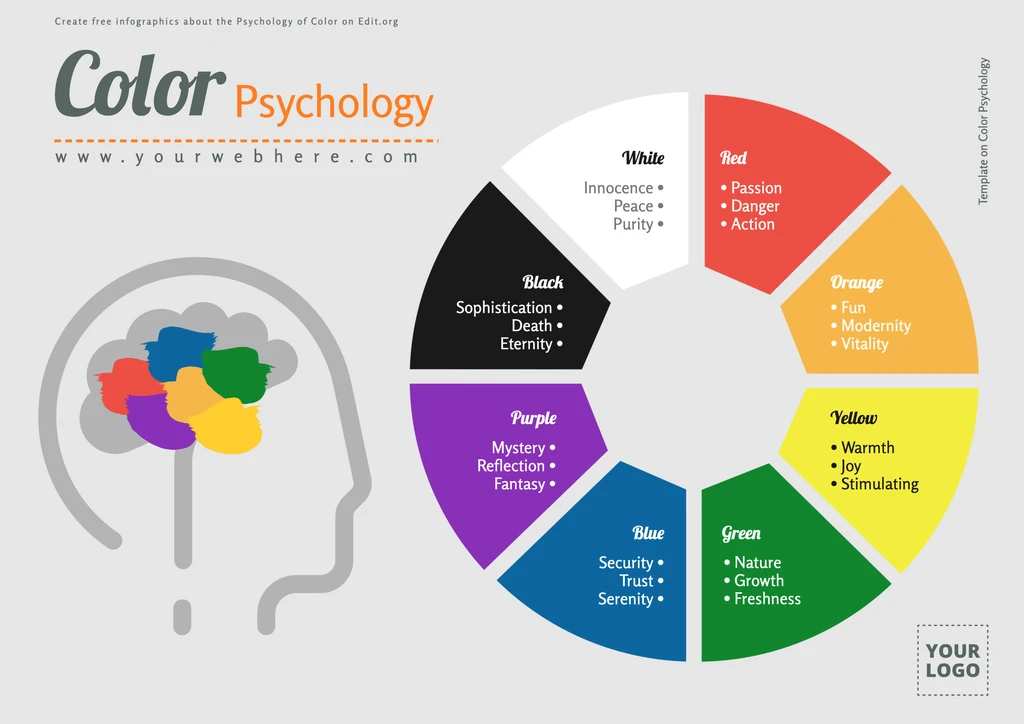
How to Get Your Landing Page Right

Heavy hitter resources:

The Meaning of Colors: How to Use Colors in Your Art — Serena Archetti

Color Meanings in Marketing & Branding

Everyone's heard of Google Analytics, but did you know about Microsoft Clarity?

✅ Do ❌ Don’t
Use one clear CTA above the fold Overload with multiple buttons or links
Design for fast scanning (use large headlines & bold colors) Rely on dense paragraphs and tiny fonts
Apply high contrast for readability Use low contrast colors that blend together
Guide the eye with visual hierarchy (F or Z layout) Scatter important content randomly on the page
Use trust signals like testimonials and recognizable logos Assume people will trust you just because your product is good
Build engagement gradually (micro-commitments) Ask for too much info upfront (long forms)
Use simple, readable fonts like Arial or Roboto Choose gimmicky or hard-to-read fonts
Tailor colors and language to your audience Assume color psychology is universal
Optimize for fast load time (under 3 seconds) Ignore performance—it’s just design, right?
Keep visitors focused (no popups or distractions) Clutter the screen with irrelevant offers
Track behavior (clicks, scroll depth, conversions) Guess what’s working and never measure anything
Test and update your page regularly Launch it and forget about it

Sunday, March 23, 2025

Prof. George Polya Shows You How to Solve It


What I am trying to present to you today will not be a lecture. It will be rather a demonstration—or an experiment. And this experiment, or demonstration, or whatever you like to call it, has the aim of showing you my attitude toward teaching.

You see, it is not a method. It is not a system. Teaching is not a science—it is an art. You cannot really put it into a system, but you may have an attitude toward it.

This attitude cannot be easily described in words—better in acts. I will try to show you that afterward, if I can. But for now, I can tell you a few slogans.

Let me put my first point in the form of a question and answer:

What is teaching?
In my opinion, teaching is giving students the opportunity to discover things for themselves. The teacher should not simply tell everything to the students. If they truly wish to learn, they must discover it on their own.

Second point: First guess, then prove.
All great discoveries were made in this way. The discoveries in the minds of Archimedes, Gauss, Newton—were conceived this way. Or at least, many important ones. And any kid in the classroom who finds something, finds it this way: first guess, then prove.

My third point is a direct application of this idea to mathematics.

Mathematics seems to consist entirely of proofs. But that’s not quite so. Finished mathematics consists of proofs—but mathematics in the making consists of guesses.

Introduction by Prof. R. A. Rosenbaum, Wesleyan University

The academic ideal in mathematics, as well as in other disciplines, is that of the scholar-teacher—the person who can contribute notably to the world store of knowledge and understanding, and who can also make others better through their teaching effectiveness. One man is acknowledged to be preeminent: the paradigm, the archetype and model for us all. This exemplar is George Pólya.

Much of Pólya’s academic life was spent in Switzerland after his education in Budapest. He came to the United States and joined the Stanford faculty in 1942. He holds a number of honorary degrees and has written many books and some 220 articles—most of them the fruits of his imaginative mathematical research. His contributions to the combined fields of mathematics and mathematics education are unequaled.

The demonstration you are about to see is truly unrehearsed and spontaneous. It illustrates his extraordinary, uncanny ability to stimulate a group to guess intelligently—to make reasonable conjectures, a process which is essential to mathematical discovery.


Prof. George Pólya:

Ladies and gentlemen, I don't wish to give you a lecture. I wish to teach you about guessing.

It's a very important part of life to be a good guesser, and a very important part of mathematics. You might wonder how—because mathematics is full of proofs, and only what is proven is valid in mathematics. So, where is the role of guessing?

Yes, mathematics, when it is finished and complete, consists of proofs. But when it is discovered, it always starts with a guess. I want to give you a real experience of this.

So instead of a lecture, we’ll play together a guessing game.

You should find out from your own experience what reasonable guessing is. Not wild guessing—anyone can do that. The less you know, the easier it is to make a wild guess. But educated, reasonable guessing—that’s something else. That should be learned, and a math class is a good place to learn it.

This game has two simple rules:

  1. If you already know the answer to my question—please don’t answer. That would spoil the fun.

  2. If you don’t know the answer—don’t hold back. Guess! Your guess may be wrong, but even a wrong guess helps lead to a better one, and eventually, to the truth.

Let’s begin.


The Problem:

I will give you a problem to guess.

It’s a problem of solid geometry. Not much to know there. For instance, what is a plane? A plane is very flat. The top of this desk, if it's well-made and smooth, approximates a mathematical plane. But the mathematical plane is ideal—flat and infinite in all directions.

Now imagine five such planes.

Imagine cutting a big block of cheese—Swiss cheese, green cheese, whatever you like—with five planes. One cut, two cuts, three, four, five. Each cut is a plane. These planes divide the space into several parts.

My question is: How many parts?

Who’s ready with a guess?

Student: 25?

Good! How did you get that?

Student: I did 5 × 5.

There’s an idea there. Great.

Anyone else?

Student: 32?

Oh! Interesting. You have something behind that.

Any more guesses?

Student: 10 spaces?

Okay, we’ll see who’s right.


But let’s pause. Guessing is just the beginning. Solving any real problem begins with a guess. A real problem always has some difficulty—otherwise, it wouldn't be a problem.

If you can’t solve it right away, what should you do? Wait for inspiration? No! The right thing is to imagine an easier problem to prepare you for the real one.

For example, I asked about five planes. Why not ask about fewer planes first?

So let’s go in order.


One plane:

Just one horizontal plane—like the surface of still water. It divides space into how many parts?

Student: Two.

Correct! Let's note that: one dividing plane → two parts.


Two planes:

Now imagine a second plane intersecting the first. You see two lines on the blackboard—those are intersections with the planes. Together, they divide space into how many parts?

Student: Four.

Right. Two planes → four parts.


Three planes:

Now, let’s imagine a third plane intersecting the other two.

Some parts are in front of the blackboard (the room), some behind. How many parts total?

Student: Eight.

Excellent.

Now let’s try a key idea in guessing: think of extreme cases.

What if there are zero dividing planes?

Then space is not divided—there’s just one region. So: zero planes → one part.


So far, we have this pattern:

  • 0 planes → 1 part

  • 1 plane → 2 parts

  • 2 planes → 4 parts

  • 3 planes → 8 parts

Now guess for four planes. Hands up!

Student: 16?

Who seconds that? Many of you? Good!

Yes, 16 is a reasonable guess. Why?

Because you observed the pattern: 1, 2, 4, 8… these are powers of 2. 2⁰, 2¹, 2², 2³.

You also had the courage to say: and so on. That’s an inductive generalization.


Is it proven?

Students: No.

Good. So let’s mark it with a question mark. It's a doubtful result—unproven.

Still, it’s a reasonable guess.

Now, how to test it?

Let’s actually try dividing space with four planes and count the resulting parts.

(He draws and demonstrates with tetrahedron.)

By analogy with dividing the plane by lines, if three lines in a plane create a triangle, four planes in space create a tetrahedron—a finite, enclosed solid.

We now count:

  • 1 part: the interior of the tetrahedron

  • 4 parts sharing a face

  • 6 parts sharing an edge

  • 4 parts sharing just a vertex

Add them: 1 + 4 + 6 + 4 = 15

But we guessed 16!

So what happened?

Answer: A very good guess—reasonable, inductive—but wrong. And that is the key experience.


Reasonable Guesses Can Be Wrong

That’s the lesson. A guess—even a respectable, inductive one—can be wrong. This is important in science and in life.

Now, let’s extend this analogy further.

We’ve looked at:

  • Space divided by planes

  • Planes divided by lines

  • Lines divided by points

Let’s take lines divided by points.

  • 0 points → 1 segment

  • 1 point → 2 segments

  • 2 points → 3 segments

  • 3 points → 4 segments

  • m points → m + 1 segments

So, we see a simple pattern here: number of parts = number of dividing elements + 1

Could we find a similar formula for space divided by planes?

This is an ambitious question—and it’s good to be ambitious in mathematics.


Return to the Original Question

So, if five planes divide space, how many parts result?

Look at our earlier numbers:

  • 0 planes → 1

  • 1 plane → 2

  • 2 planes → 4

  • 3 planes → 8

  • 4 planes → 15

Now what about 5 planes? What number should come next?

Students offer guesses: 21, 26, 28, 29...

One student suggests 26 and explains:

"I saw a pattern. In the columns of a triangular number table, if you add two previous values, you get the next."

This is another inductive guess. Is it proved?

Students: No.

Right. But do you believe it more now, since 11 (in a 2D analogy) was verified?

Students: More.

That’s reasonable. The verification of 11 gives us inductive evidence for the pattern.


Final Thoughts

So 26 is not proven. But it has more credibility now.

The key points in reasonable guessing are:

  • Use extreme cases

  • Use analogy

  • Use induction

  • Test your guess

  • Always distinguish a fact from a guess

Let me close with a story about that distinction.

A member of the Royal Society in England once rushed into a meeting and gave his hat to the janitor without taking a ticket. After the meeting, the janitor handed it back to him.

The scientist said, a bit patronizingly, “How did you know it was my hat?”

The janitor replied sharply:

“Sir, I don’t know whether it’s your hat. It’s the hat you gave me.”

That’s the difference between a fact and a theory—a guess.

What You Can Do to Superage, not Just Age


Resource

Northwest Medicine

Harvard Health

(Brad Dickerson)

AARP

(Sari Harrar)

NY Times

(Lisa Feldman Barrett)

U-Mich Psychiatry

(Amanda Maher)

Active lifestyle

X

X

X

X

X

Self-imposed challenges

X

X

X

X

Active social life

X

X

X

X

Indulgence (treats)

X

Anticipate frustration

X

X

Don't let age deter you

X

Healthy diet (greens, flavonoids, etc) to control BP and blood sugar

X

More challenging exercise than peers (quality, not quantity)

X

X

Avoid stress, prioritize mental health

X

Protect vision and hearing

X (cataract op +
 h aids)

Prioritize sleep

X

More variety than just sudoku/X-words. Shows, classes, etc

X

Work hard at something (difficult) (deliberate practice)

X (swim, play bridge)

Resilience

X

Aren't you glad fasting ain't on the list? :) No mention of moderation either :) I guess they just took it for granted :) FYI, it's midcingulate cortex and anterior insula that evidence this superaging - "emotional" parts of the brain, not analytical ones. No wonder Einstein said he wished he had played more. 

Thank you removepaywalls.com :) Couldn't have done it without you :)